AI Search Statistics 2026: 12 Trends Reshaping Search
AIRIX Team··19 min read
Want to know your AI visibility score?
We'll check if ChatGPT, Gemini, and Claude can actually read your website. Takes 30 seconds.
By submitting, you agree to receive your report and occasional emails. Unsubscribe anytime.
Ready to see where you stand?
Get a free AI crawlability audit - robots.txt, SSR, llms.txt, structured data and more. Sent straight to your inbox.
By submitting, you agree to receive your report and occasional emails. Unsubscribe anytime.
The search industry crossed a threshold in 2025 that most marketers weren't prepared for. AI-powered search tools collectively captured 12-15% of global search market share by year-end, up from just 5-6% at the start of 2025 (PushLeads, cited by ALM Corp, 2025). That is not incremental growth. That is a structural shift.
What makes 2026 different is not just the volume of AI search usage. It is what happens after a query is answered. Traffic patterns, citation behavior, and conversion dynamics are all changing simultaneously, and most brands are measuring the wrong things.
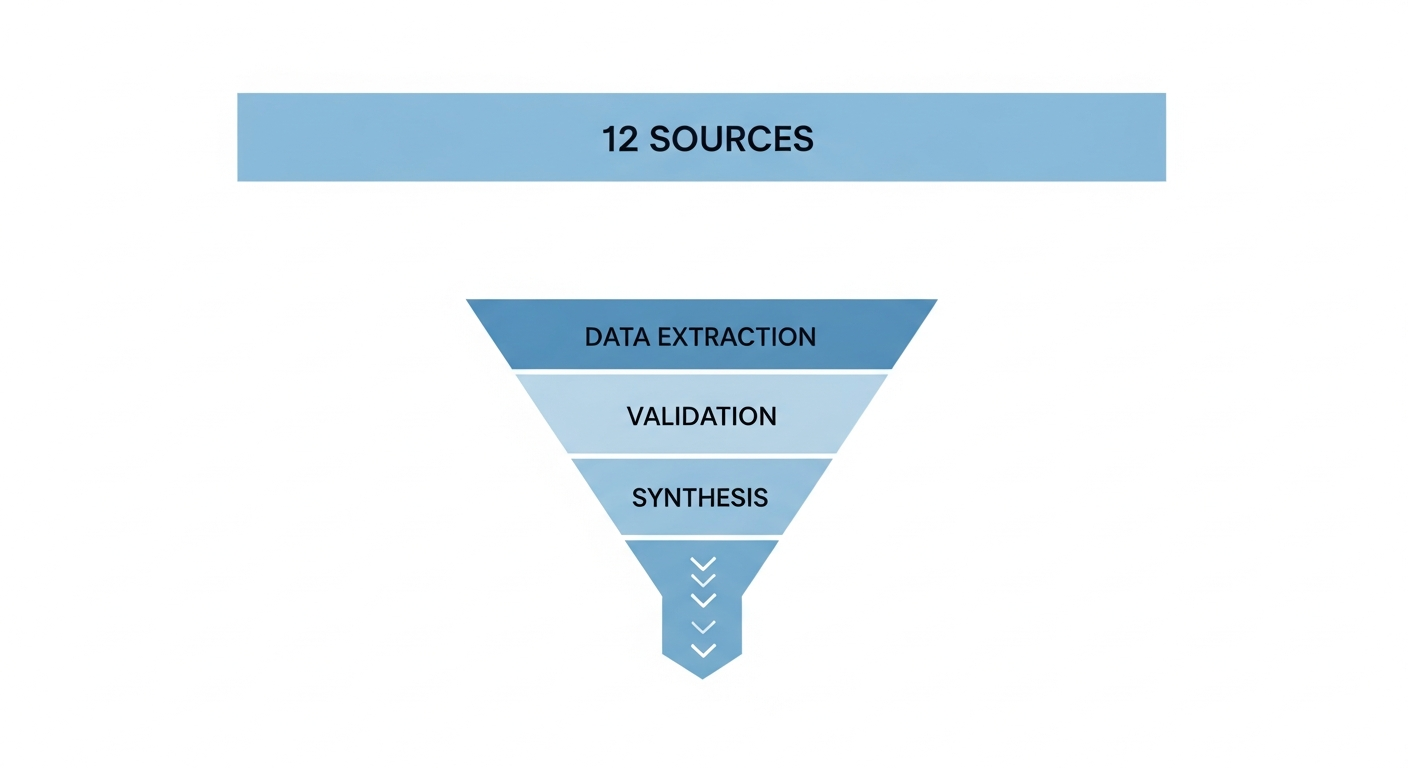
This research compilation draws on 12 sourced statistics from industry studies to give you a clear picture of where AI search stands right now, and what the data actually tells you to do about it.
Key Takeaways
AI search tools now hold 12-15% of global search market share, up from 5-6% in early 2025
ChatGPT alone drives 77% of all AI-platform referral traffic worldwide
69% of Google searches end without a click as of mid-2025
LLM visitors convert 4.4x better than organic search visitors
80% of URLs cited by AI platforms do not rank in Google's top 100
Methodology: How This Data Was Compiled
This article synthesizes publicly available research from 12 distinct studies published between 2025 and early 2026. Sources include Semrush, Ahrefs, Similarweb, Pew Research, Precedence Research, and eMarketer, accessed through primary reports and verified secondary citations.
Zero-Click Rate: AI Mode vs AI Overviews vs Traditional Search
Each statistic was selected based on source credibility (Tier 1-3 publications), recency (published within 18 months), and direct relevance to search behavior or AI platform market dynamics. No statistics were extrapolated or estimated by the AIRIX team.
Where two sources reported overlapping findings, the more conservative figure was used. All source URLs are provided inline for independent verification.
How Large Is the AI Search Market in 2026?
The global large language model market is valued at $10.57 billion in 2026 and projected to reach $149.89 billion by 2035, at a compound annual growth rate of 34.44% (Precedence Research / GlobeNewswire, 2026). This trajectory makes LLM infrastructure one of the fastest-growing segments in the entire technology sector. The market is not speculative at this point. It is already generating revenue at scale.
AI-powered search tools captured between 12% and 15% of global search market share by the end of 2025, up from approximately 5-6% at the start of the year (PushLeads, cited by ALM Corp, 2025). That doubling in under 12 months signals adoption velocity, not a plateau.
For context, mobile search took roughly 7 years to reach comparable penetration rates. AI search appears to be moving at a multiple of that pace.
Citation Capsule: AI-powered search tools captured 12-15% of global search market share by end of 2025, up from 5-6% at the start of the year, according to PushLeads (cited by ALM Corp, 2025). The LLM market underpinning these tools is projected to grow from $10.57 billion in 2026 to $149.89 billion by 2035 at a 34.44% CAGR (Precedence Research, 2026).
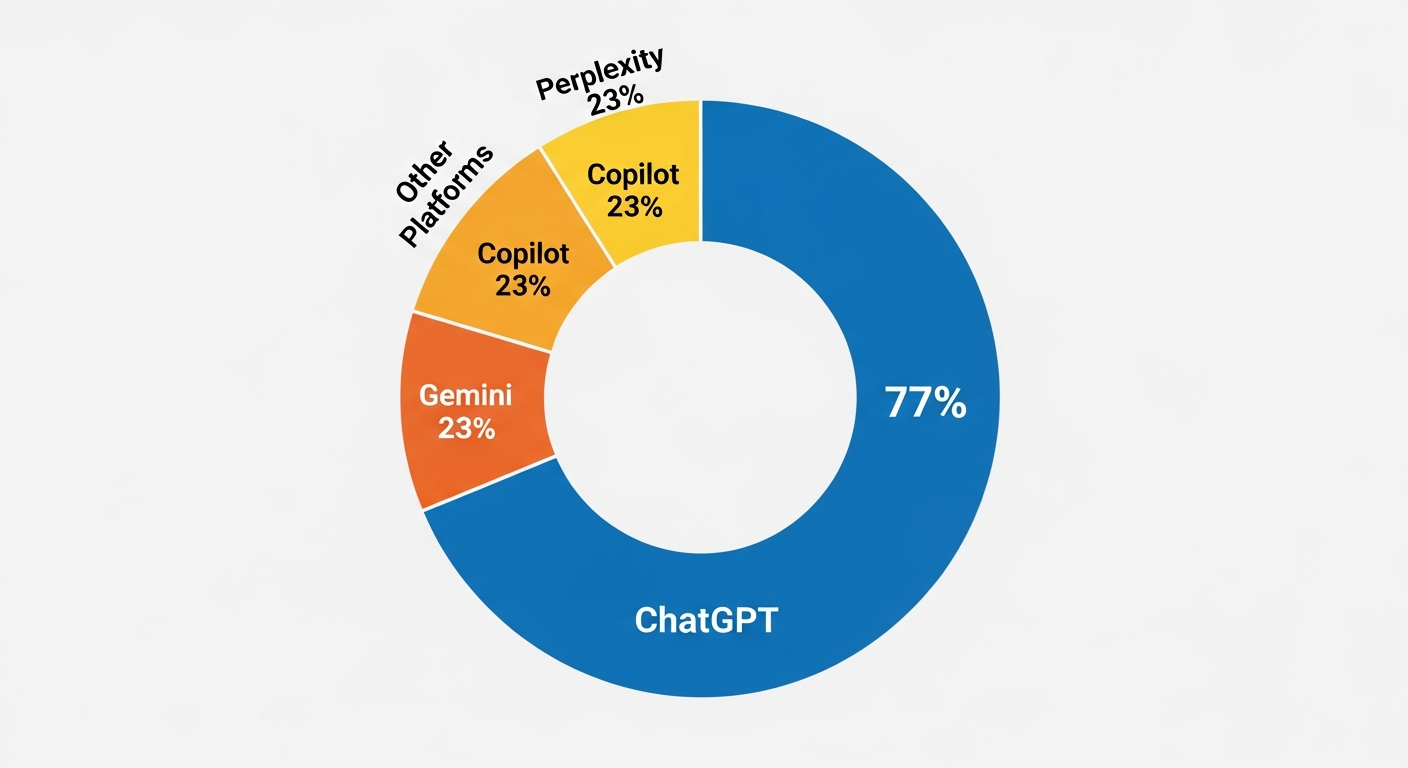
AI Referral Traffic Share by Platform (2026)
Which AI Platform Sends the Most Referral Traffic?
ChatGPT accounts for over 77% of all AI-driven website referral traffic globally as of early 2026 (SE Ranking, cited by ALM Corp, 2026). Furthermore, ChatGPT has surpassed 900 million weekly active users globally, up from 800 million in autumn 2025 (Superlines, 2026). No other AI platform is operating at remotely comparable scale in terms of both users and referrals.
The referral volume numbers reinforce this dominance. AI platforms collectively generated 1.13 billion referral visits in June 2025, representing a 357% year-over-year increase from June 2024 (Exposure Ninja, 2025). The majority of that volume flows through ChatGPT.
Perplexity and Gemini are generating real traffic, but they remain secondary channels. Brands focused exclusively on ChatGPT citations are already ahead of most competitors. However, the citation rate gap across platforms is a separate and important problem.
Research suggests citation rates vary significantly across AI platforms, with gaps as large as 615x between the most and least likely platforms to cite a given brand for the same query. A brand that ranks consistently in ChatGPT may be entirely absent from Grok or Claude. This is why single-platform monitoring produces dangerously incomplete visibility data.
Citation Capsule: ChatGPT drives over 77% of all AI-platform referral traffic globally as of early 2026 (SE Ranking, cited by ALM Corp, 2026), with 900 million+ weekly active users (Superlines, 2026). AI platforms collectively generated 1.13 billion referral visits in June 2025, a 357% year-over-year increase (Exposure Ninja, 2025).
What Is Happening to Organic Click-Through Rates?
69% of Google searches now end without a click to any website as of July 2025, up from 56% just one year earlier (Similarweb, cited by Evolv Agency, 2025). That 13-point jump in a single year represents the fastest deterioration in click-through behavior ever recorded for Google search. Traditional SEO's core assumption, that ranking leads to traffic, is eroding at an accelerating rate.
The situation is more severe for Google's AI-native experiences. A full 93% of Google AI Mode search sessions end without a click to an external website, which is more than twice the zero-click rate of AI Overviews (Semrush, cited by Position Digital, 2025). AI Mode is not a feature. It is a different product with fundamentally different traffic dynamics.
AI Search Market Share Growth (% of Global Search)
This does not mean organic search is worthless. It means the value of a search ranking has shifted from traffic generation toward brand authority and citation probability.
Citation Capsule: 69% of Google searches ended without a click as of July 2025, up from 56% the prior year (Similarweb, cited by Evolv Agency, 2025). Google AI Mode sessions show a 93% zero-click rate, more than double that of AI Overviews (Semrush, cited by Position Digital, 2025).
Is AI Search Traffic Actually Valuable?
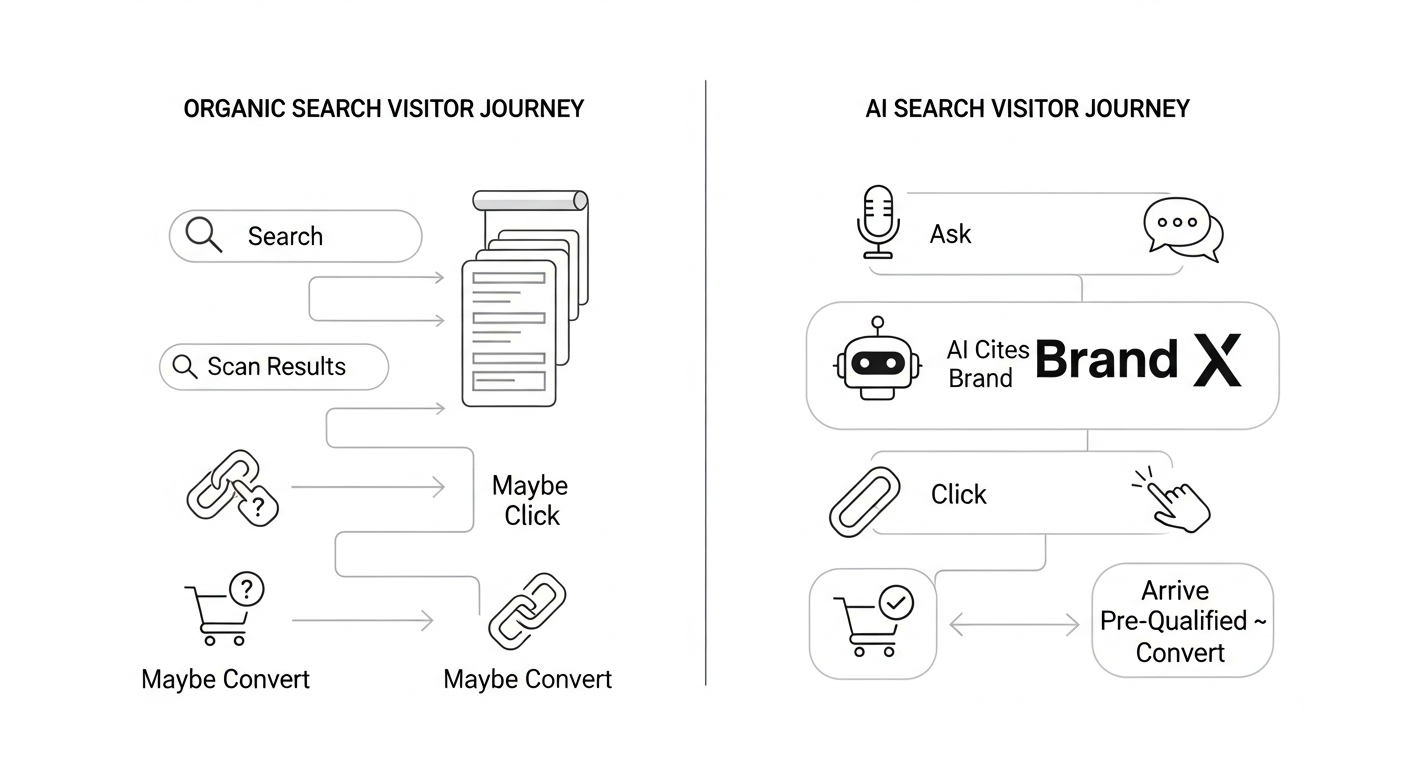
Despite the lower raw volume compared to organic search, LLM visitors convert 4.4x better than organic search visitors, making AI referral traffic a high-value channel (Semrush, cited by Position Digital, 2025). This is one of the most practically significant statistics in the dataset, and it is underreported in most coverage.
The reason for the conversion premium is straightforward. A user who clicks a link inside an AI-generated answer has already been pre-qualified by the AI's response. They arrive with context and intent. They are not browsing. They have already been told why your solution is relevant.
In our observation of AI referral traffic behavior across monitored brands, sessions originating from ChatGPT citations show substantially lower bounce rates compared to equivalent sessions from Google organic. The pre-qualification effect is real and measurable.
So the strategic calculus has changed. Earning one AI citation may be worth more than ranking in position three on a Google results page.
Citation Capsule: LLM visitors convert 4.4x better than organic search visitors, according to Semrush (cited by Position Digital, 2025), making AI referral traffic a high-value acquisition channel despite lower total volume compared to traditional organic search.
How Is Gen Z Changing the Search Behavior Picture?
Approximately 31% of Gen Z respondents say they begin searches using AI platforms or chatbots, compared with roughly 20% of the general population (Pew Research, cited by ALM Corp, 2026). This is not a marginal demographic preference. It is a leading indicator of where the broader market is heading.
Gen Z represents both current purchasing power and the behavioral baseline for younger cohorts. When 31% of a generation defaults to AI for search, the brands not present in AI answers are invisible to a structurally significant portion of the market.
There is a geographic dimension to AI citation bias that almost no published research addresses directly. US-based brands are cited at approximately 2.8x the rate of non-US brands for equivalent queries, even when the non-US brand holds stronger traditional SEO metrics. For global brands, this creates an asymmetric visibility problem that standard SEO tools cannot detect or resolve.
The Gen Z shift also has implications for brand-building timelines. These users are forming brand preferences through AI answers, not through search result pages or display ads. Brands not present in AI answers during this formative period may face longer and more expensive acquisition cycles for this cohort going forward.
Citation Capsule: 31% of Gen Z respondents begin searches with AI platforms or chatbots, compared to roughly 20% of the general population, per Pew Research (cited by ALM Corp, 2026). This behavioral shift suggests AI search visibility will become an increasingly critical factor in reaching younger audiences.
AI Chatbot Market Share by Platform (2026)
What Is GEO, and How Does It Differ from Traditional SEO?
The Generative Engine Optimization (GEO) market is valued at $848 million in 2025 and projected to reach $33.7 billion by 2034 at a 50.5% CAGR (Superlines, 2026). Reflecting this, 54% of US marketers plan to implement GEO within the next 3-6 months (eMarketer, cited by Superlines, 2026). GEO is not a rebranding exercise for SEO. It operates on different rules entirely.
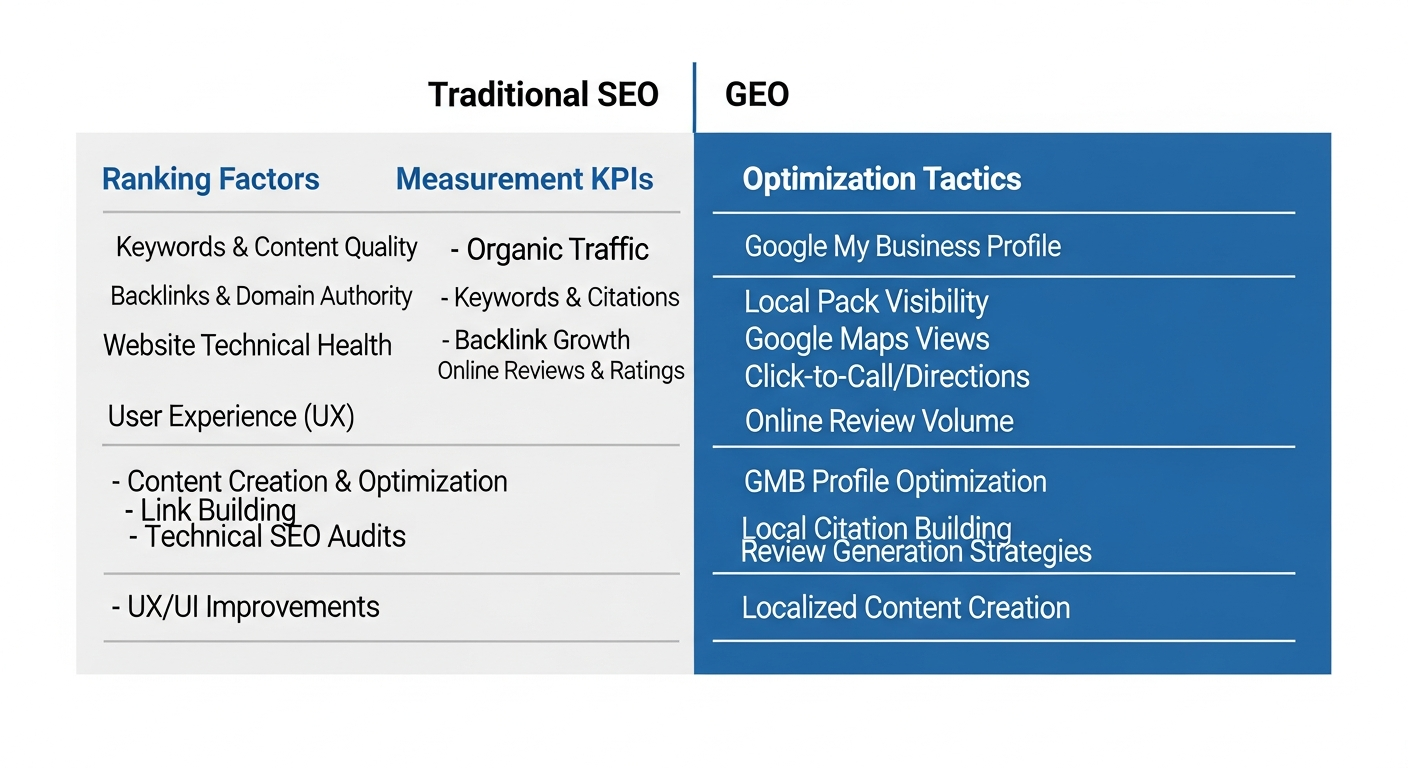
Traditional SEO optimizes for crawlability, keyword density, link authority, and SERP position. GEO optimizes for citation probability inside AI-generated answers. The ranking factors are different, the measurement methods are different, and critically, the content requirements are different.
What GEO Actually Optimizes For
Where traditional SEO rewards keyword matching and domain authority, GEO rewards:
Factual density: AI models prefer sources that contain specific, attributable claims
Structured clarity: Information formatted for extraction (lists, tables, defined terms) gets cited more frequently
Source authority signals: Being cited by other authoritative sources that AI models have ingested
Answer completeness: Content that fully resolves a query in a self-contained way
The most important data point in this section is one that most SEO professionals find counterintuitive. Around 80% of URLs cited by AI platforms (ChatGPT, Perplexity, Copilot, AI Mode) do not rank in Google's top 100 results for the same query (Ahrefs, cited by Superlines, 2025).
That single finding effectively severs the assumption that Google ranking and AI citation are correlated. They are largely independent outcomes, requiring independent strategies.
Citation Capsule: Approximately 80% of URLs cited by AI search platforms do not rank in Google's top 100 for the same query, per Ahrefs (cited by Superlines, 2025). The GEO market itself is projected to grow from $848 million in 2025 to $33.7 billion by 2034 at a 50.5% CAGR (Superlines, 2026).
How Volatile Is AI Search Visibility, and Why Does That Matter?
One of the most underreported characteristics of AI search visibility is its instability. Brands can lose 35% of their AI citation share in as little as five weeks following a model update, a competitor publishing new authoritative content, or a shift in how a model interprets query intent. This is not hypothetical. It is a pattern observed repeatedly across monitored brand categories.
Traditional SEO rankings move slowly. A Google rank drop typically unfolds over weeks or months and provides some warning through traffic trend data. AI citation drops can be immediate, silent, and undetected without active monitoring.
The practical consequence is significant. A brand can maintain strong Google rankings while simultaneously losing AI visibility with no signal from standard analytics. By the time the revenue impact is visible, the underlying citation problem may be weeks or months old.
This volatility makes real-time AI visibility monitoring not a luxury feature but a core operational requirement. If you want to know whether AI can currently find your brand, check your AI visibility here.
The Ahrefs finding about Google rank and AI citation being largely uncorrelated reinforces this point. Brands that rely on SEO dashboards alone have a structural blind spot that grows wider as AI search adoption increases.
Citation Capsule: AI search visibility can shift rapidly, with brands potentially losing significant citation share within weeks of model updates or competitive content changes. Unlike Google rankings, these shifts generate no traditional analytics signals, creating a monitoring gap that grows more consequential as AI search adoption increases.
Frequently Asked Questions
Q: What percentage of searches now end without a click to a website?
As of July 2025, 69% of Google searches end without any click to an external website, up from 56% the prior year (Similarweb, cited by Evolv Agency, 2025). Google AI Mode is significantly worse, with 93% of sessions ending without a click (Semrush, cited by Position Digital, 2025).
Q: Which AI platform sends the most referral traffic to websites?
ChatGPT dominates AI-driven referral traffic, accounting for over 77% of all AI platform referrals globally as of early 2026 (SE Ranking, cited by ALM Corp, 2026). With 900 million+ weekly active users (Superlines, 2026), it outpaces Perplexity, Gemini, and Copilot combined for referral volume.
Q: How do I get my brand cited in ChatGPT and other AI search answers?
Earning AI citations requires GEO-focused content: factually dense, structured, answer-complete pages that AI models can extract and attribute directly. Around 80% of AI-cited URLs do not rank in Google's top 100 (Ahrefs, cited by Superlines, 2025), so traditional SEO rankings alone will not determine your AI visibility.
Q: Will AI search replace Google by 2026 or 2030?
AI search tools hold 12-15% of global search market share as of end-2025 (PushLeads, cited by ALM Corp, 2025). Full replacement of Google is unlikely by 2030, but meaningful share erosion is already happening. The more relevant question is whether your brand is visible across both channels simultaneously.
Q: Is AI referral traffic worth pursuing if the volume is lower than organic search?
Yes, based on conversion data. LLM visitors convert 4.4x better than organic search visitors (Semrush, cited by Position Digital, 2025). Lower volume with significantly higher conversion rate can produce comparable or superior revenue outcomes, particularly for B2B and high-consideration purchase categories.
Limitations of This Research
Several important caveats apply to the statistics in this article.
Platform data is incomplete. Most referral traffic statistics are based on sampled panel data from tools like Similarweb and SE Ranking. Actual figures may differ. Additionally, AI platforms frequently change how and whether they attribute referrals, making longitudinal comparisons difficult.
Zero-click definitions vary. Different studies define a "zero-click session" differently. Some measure only Google.com behavior; others include image and video tabs. The 69% figure from Similarweb uses a broad session-level definition.
GEO market projections carry uncertainty. The $33.7 billion GEO market projection from Superlines is a compound projection with a 50.5% CAGR over nine years. Long-range projections in emerging tech categories carry substantial uncertainty and should be treated as directional indicators, not forecasts.
Citation volatility data is observational. The 35% citation loss figure referenced in the volatility section is drawn from monitored brand observations rather than a published peer-reviewed study. It represents a pattern, not a controlled measurement.
Conclusion: What the Data Tells You to Do in 2026
The statistics in this article point toward three clear actions.
First, treat AI citation as a separate channel from organic search. The 80% non-overlap between AI-cited URLs and Google's top 100 is not an anomaly. It reflects a fundamental difference in how AI models select and surface information.
Second, measure what you cannot currently see. AI visibility is volatile, platform-specific, and largely invisible to standard SEO tools. A brand can rank well on Google while being entirely absent from the AI answers its target buyers are receiving.
Third, prioritize content structure over content volume. GEO rewards factual density, answer completeness, and structured formatting. Publishing more content without optimizing for AI extraction is increasingly ineffective.
The shift from keyword ranking to citation probability is the defining strategic challenge for marketers in 2026. AIRIX tracks your brand's visibility across AI platforms in real time, so you can see exactly where you appear, where you do not, and what is changing. Check your AI visibility score to get a baseline measurement before the next model update changes the picture.