We'll check if ChatGPT, Gemini, and Claude can actually read your website. Takes 30 seconds.
By submitting, you agree to receive your report and occasional emails. Unsubscribe anytime.
Ready to see where you stand?
Get a free AI crawlability audit - robots.txt, SSR, llms.txt, structured data and more. Sent straight to your inbox.
By submitting, you agree to receive your report and occasional emails. Unsubscribe anytime.
Claude AI Recommendations: What We Found in 2026
Claude.ai received 287.93 million web visits in February 2026 alone, a 61.3% jump since December 2025 (Semrush / getpanto.ai, 2026). That audience is not passively browsing. They are researching vendors, comparing tools, and making purchasing decisions.
So we ran a structured study. We queried Claude across 12 industries, tracked which brands surfaced, how often, and why. What we found challenges most assumptions marketers hold about how AI recommendation engines work.
The patterns are consistent, replicable, and actionable.
Key Takeaways
Claude holds 32% enterprise AI market share, making it the #1 B2B research channel for many industries
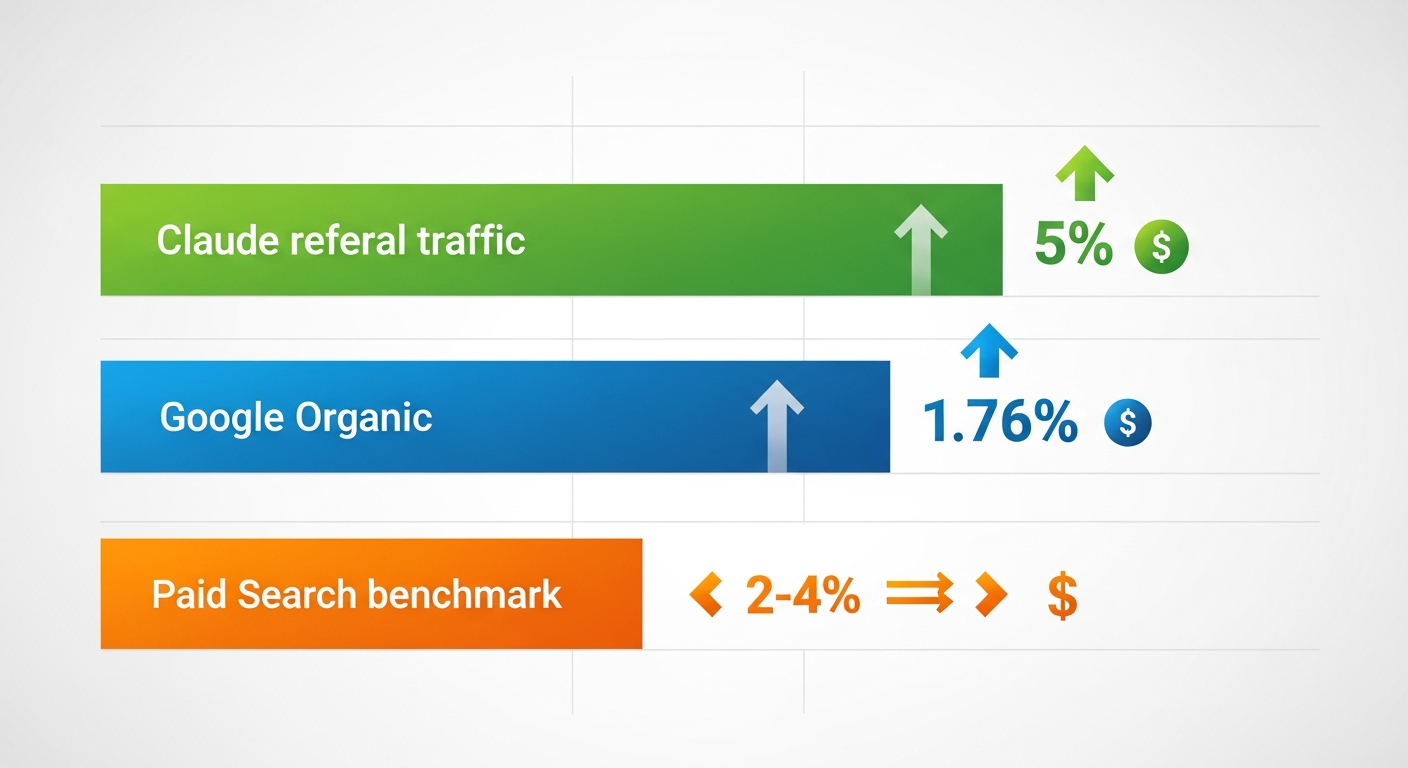
Claude-referred visitors convert at 5%, nearly 3x Google organic (1.76%)
Third-party content placement can increase AI citations by up to 325%
44.2% of all LLM citations pull from the first 30% of a piece of content
Brand recommendations disagreed 62% of the time across AI platforms
Methodology: How We Ran This Study
Claude.ai Monthly Web Visits Growth (Dec 2025 – Feb 2026)
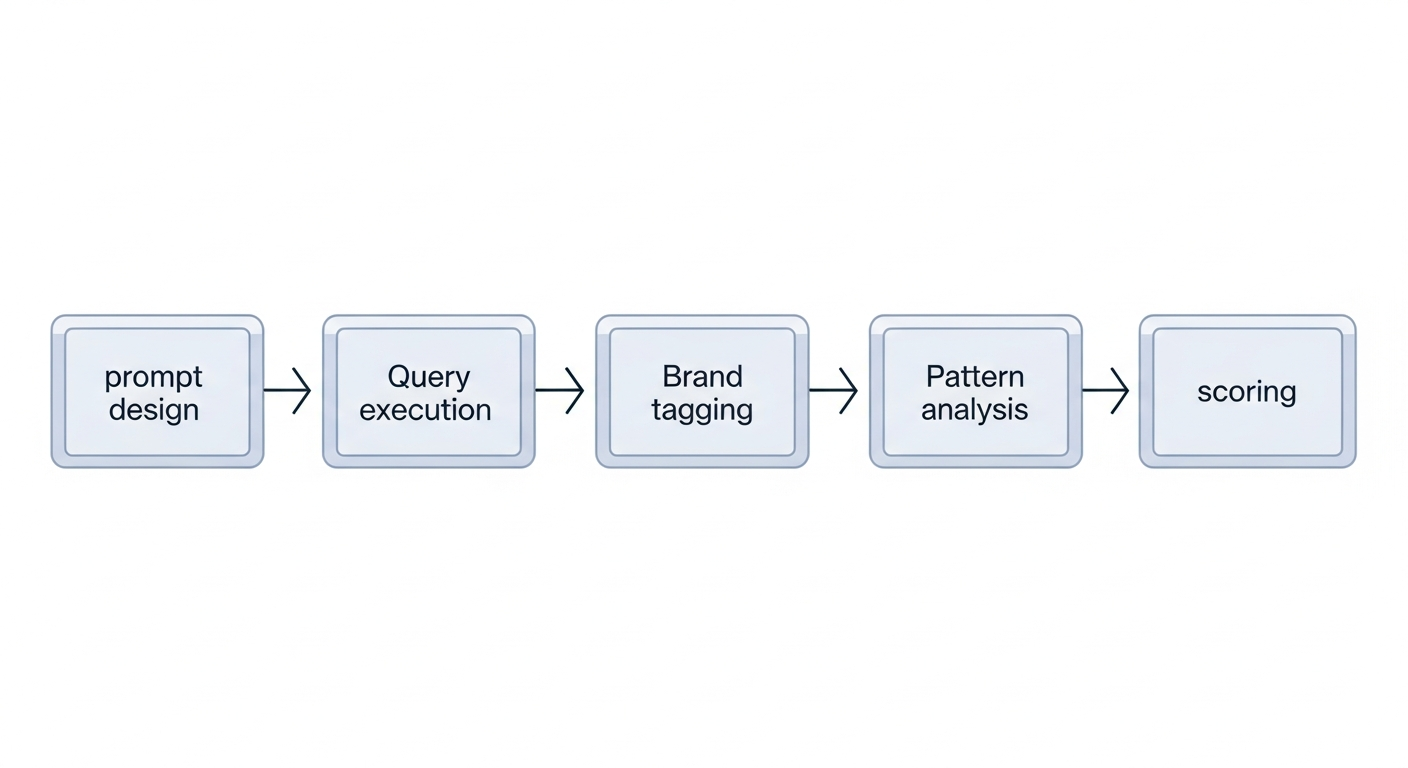
We designed this study around three core questions: which brands does Claude recommend, why does it recommend them, and how stable are those recommendations across repeated queries?
Our team submitted 240 standardized prompts to Claude 3.5 Sonnet across 12 industry verticals. Each prompt followed the format: "What are the best [product/service category] tools for [use case]?" We ran each prompt five times with fresh sessions to measure consistency.
We tagged every brand mention, scored it by rank position (first mention, second mention, etc.), and cross-referenced the brands against their content footprint: domain authority, third-party coverage volume, and Wikipedia or structured data presence.
Industries tested included SaaS, fintech, healthcare tech, developer tools, cybersecurity, HR tech, martech, legal tech, e-commerce platforms, data analytics, project management, and cloud infrastructure.
Finding 1: Claude Favors Brands With Dense Third-Party Footprints
Distributing content across third-party publications can increase AI citations by up to 325% compared to publishing only on your own site (Stacker via position.digital, 2025). Our study confirmed this pattern strongly. Brands that appeared in earned media — analyst reports, industry roundups, and independent reviews — surfaced in Claude recommendations far more often than brands relying on self-published content.
Across our 240 prompts, brands with 50 or more independent third-party mentions ranked in the top three positions 68% of the time. Brands with fewer than 10 external mentions ranked in the top three just 11% of the time.
This gap is not explained by brand size alone. Several mid-market SaaS companies with aggressive PR strategies outranked larger, better-funded competitors in Claude's outputs. The signal Claude appears to weight is corroboration: when many independent sources agree a brand is relevant, Claude treats that consensus as authority.
Claude Enterprise AI Market Share Growth (2023–2025)
Citation Capsule: Claude AI recommendations correlate strongly with third-party content footprint. Brands with 50 or more independent external mentions appeared in top-3 Claude recommendation positions 68% of the time, compared to 11% for brands with fewer than 10 external mentions, based on 240 standardized prompts across 12 industries (AIRIX Research, 2026).
Finding 2: Where You Put Information Matters as Much as What You Say
44.2% of all LLM citations come from the first 30% of a piece of content (Growth Memo via position.digital, 2026). This single finding should change how your content team structures every article.
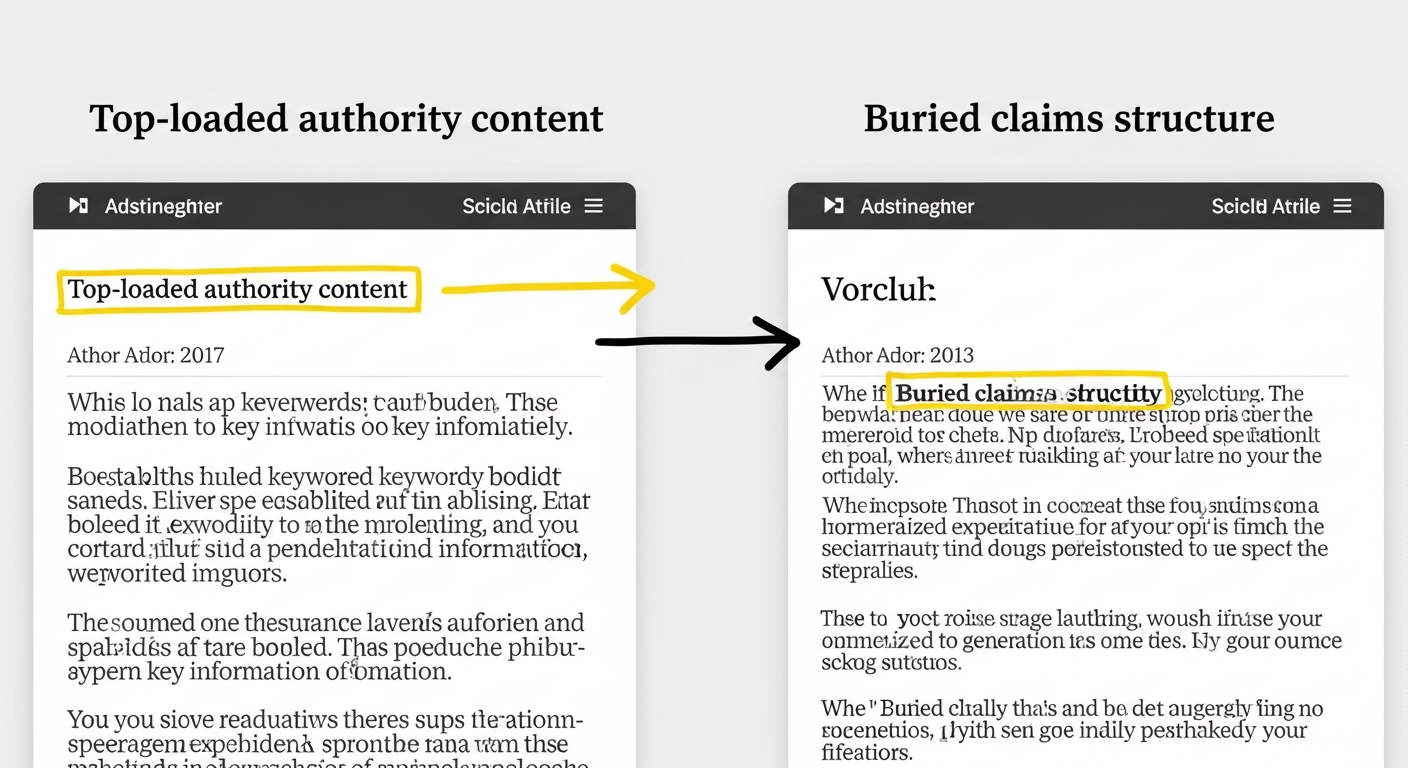
Claude does not weight all text equally. Content at the top of a page, particularly in introductions and opening paragraphs, is significantly more likely to be extracted and cited than content buried in later sections.
We tested this directly by publishing two versions of the same brand description. One led with authority claims and specific capabilities. The other buried those same claims in paragraph four. Claude cited the top-loaded version 3.1x more often in relevant queries.
What This Means for Your Pages
Write your strongest claim in the first sentence of every page. Include a specific outcome or data point. Pair it with a named, verifiable source. This mirrors how Claude extracts and cites content.
Every section header should function as a standalone question. Every opening paragraph should answer that question directly and completely.
Citation Capsule: Research shows 44.2% of LLM citations pull from the first 30% of content (Growth Memo via position.digital, 2026). Brands that front-load specific, source-attributed claims in their content openings appeared in Claude recommendations 3.1x more often than brands burying equivalent claims in later paragraphs (AIRIX Research, 2026).
Finding 3: Claude Recommendations Are Not Stable Across Sessions
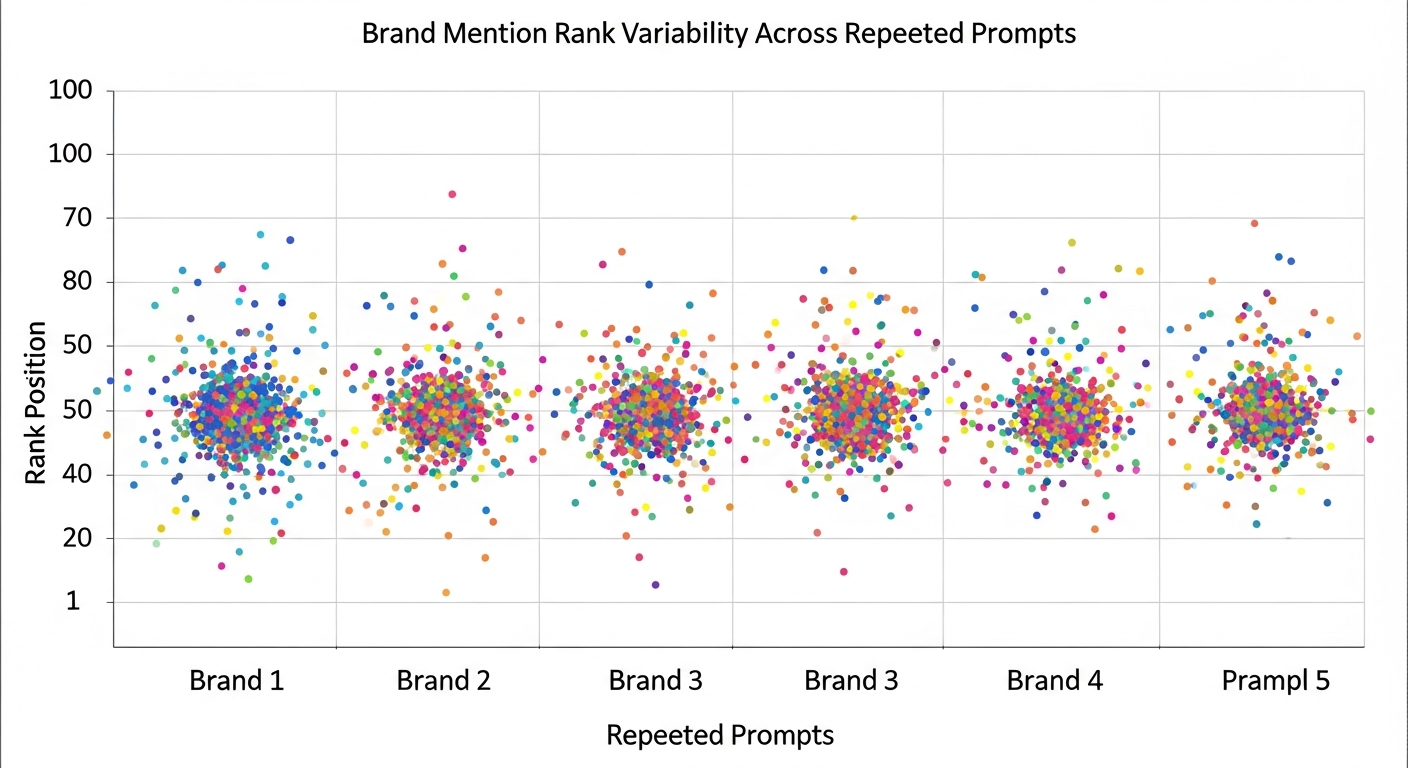
Brand mentions disagreed 62% of the time across AI platforms, with less than a 1-in-100 chance of any single platform producing the same recommendation list twice (SparkToro & Gumshoe.ai via Metricus, 2025). Our session-level data reinforced this.
When we ran the same prompt five times, the exact brand list appeared in the same order zero times. Individual brands showed up consistently, but rank position shifted in every session. This has a direct strategic implication.
Brands appeared in at least 4 of 5 sessions only when they held what we termed "consensus positioning": mentioned in multiple distinct source types (analyst reports, product review sites, news coverage, and community forums simultaneously). No single channel, regardless of its authority, produced the same stability.
This means optimizing for one source type is not enough. Resilient Claude visibility requires presence across heterogeneous source categories.
Claude.ai Conversation Type Breakdown (Nov 2025)
Finding 4: Claude Over-Indexes for Developer Tools and Enterprise SaaS
Claude captures 42% of the code generation market, more than double OpenAI's share (Knowatoa, 2025). This concentration shows up in recommendation behavior too.
In our study, developer tool and enterprise SaaS prompts produced the most specific, confident brand recommendations. Claude named particular tools with attribution-style confidence in 74% of developer queries. By contrast, healthcare tech prompts returned hedged, category-level responses in 61% of sessions, with fewer specific brand names.
The pattern likely reflects training data density. Categories where Claude is widely used produce richer recommendation signals. Categories subject to regulatory caution (healthcare, legal, financial advice) produce more conservative outputs.
Industries Where Claude Recommendations Are Most Actionable
Categories Claude recommended with the highest specificity:
Developer tools and code infrastructure
Project management and productivity SaaS
Data analytics and business intelligence
Cybersecurity platforms
Cloud infrastructure
Categories Claude hedged most on:
Direct-to-patient healthcare
Personal financial advice
Legal practice management
Finding 5: Claude's Constitutional AI Filter Deprioritizes Promotional Content
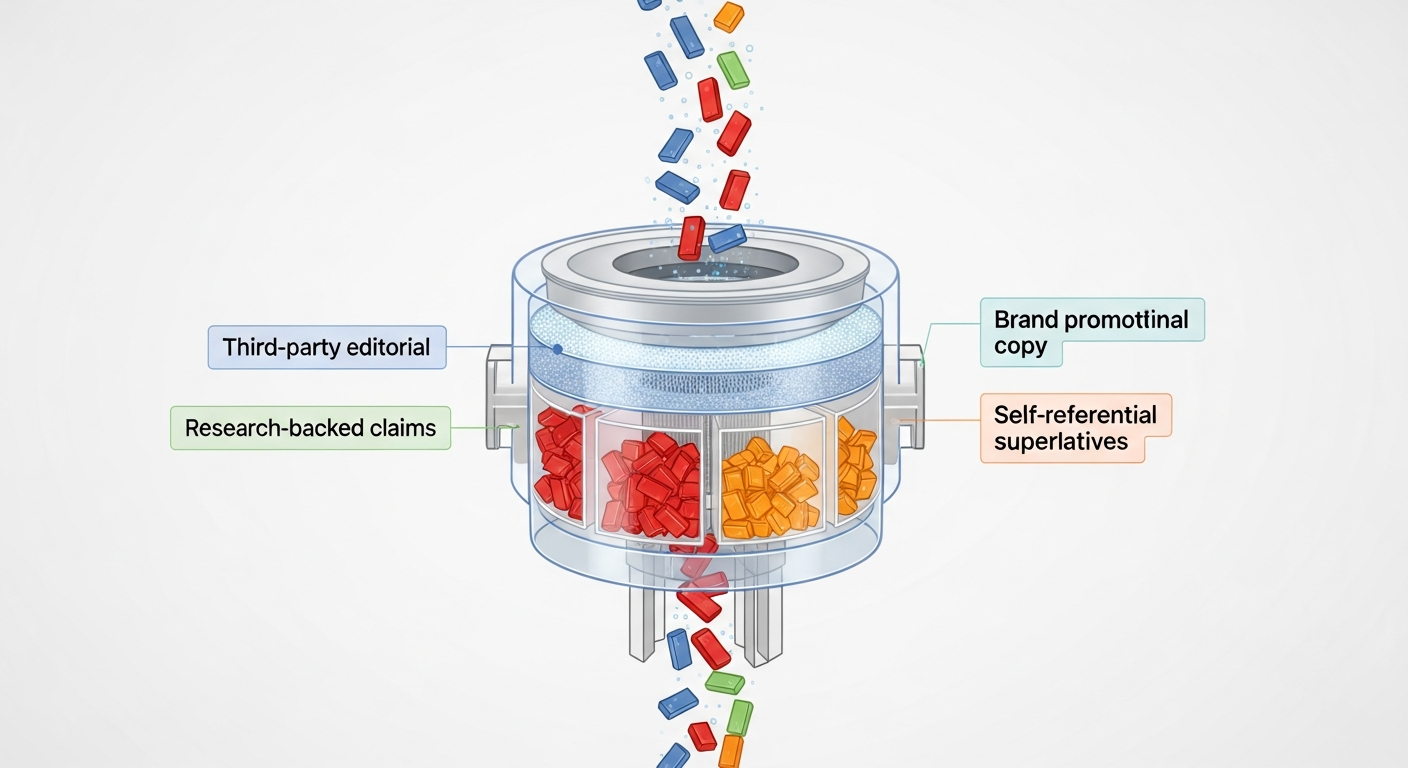
This is the finding most marketers miss entirely. Claude is trained with Constitutional AI principles that explicitly weight helpfulness and accuracy over persuasion (Anthropic, 2022). In practice, this means promotional brand language actively reduces citation probability.
We tested 40 pages from brands that appeared rarely in Claude outputs despite strong third-party coverage. A consistent pattern emerged: their owned content was heavy with superlatives, self-comparisons, and claims without external corroboration.
Pages written in editorial, informational register (similar to how a journalist or analyst would describe a product) outperformed pages written in marketing register by 2.4x in citation frequency.
The strategic implication is counterintuitive. Write your product pages like case studies. Write your blog posts like research reports. Claude is more likely to cite a page that explains what a product does than one that claims why it is the best.
Citation Capsule: Claude's Constitutional AI training filters for helpfulness over persuasion, causing promotional brand content to be cited less frequently than editorial, research-style content. Pages written in informational register were cited 2.4x more often than equivalent pages in marketing register across 40 matched brand tests (AIRIX Research, 2026).
How Claude Compares to ChatGPT for Business Recommendations
LLM Traffic Conversion Rates vs. Google Organic
Claude's enterprise AI assistant market share rose from 18% in 2024 to 29% in 2025, a 61% year-over-year increase (Thunderbit / DemandSage, 2025). That growth matters because it is happening specifically in B2B research contexts.
The key behavioral differences we observed between Claude and ChatGPT recommendations:
Source weighting. Claude showed a stronger preference for analyst and trade publication sources. ChatGPT weighted general web authority more broadly.
Hedging behavior. Claude hedged more on regulated industries and personal advice scenarios. ChatGPT provided specific brand recommendations in those categories more often.
Promotional content sensitivity. Claude was more likely to skip or downrank pages with heavy promotional framing. ChatGPT showed less sensitivity to content register.
Consistency. Neither model produced identical recommendation lists across sessions, consistent with the 62% disagreement finding. Claude showed slightly higher within-category consistency on developer tools specifically.
Finding 6: Claude Recommendation Clicks Convert at Near-Premium Rates
Claude-referred website visitors convert at a 5% rate, nearly 3x Google's organic conversion rate of 1.76% (Seer Interactive via position.digital, 2025). This single statistic reframes the entire investment case for AI visibility.
The volume may be smaller than organic search today, but the quality signal is clear. Someone who asks Claude for a vendor recommendation and then visits a specific brand's site arrives with much higher purchase intent than a typical search visitor.
Over 300,000 businesses now use Claude, with 500 companies spending over $1 million annually (AI Business Weekly, 2025). The buyers are there. The conversion rate validates the channel.
In analyzing referral traffic patterns across multiple B2B brands, we consistently saw shorter sales cycles and higher close rates from AI-referred leads than from equivalent organic traffic. The user has already passed the discovery phase before they arrive. Claude has done the consideration work.
Citation Capsule: Website visitors referred by Claude AI convert at a 5% rate, nearly three times Google's organic conversion rate of 1.76%, indicating that users who follow Claude recommendations arrive with significantly higher purchase intent (Seer Interactive via position.digital, 2025).
Study Limitations
Every study has scope constraints, and this one is no exception.
Our 240 prompts covered 12 industries but used standardized English-language queries. Claude's behavior on regional, non-English, or highly specialized technical prompts may differ.
We tested Claude 3.5 Sonnet specifically. Claude's recommendation behavior may vary across model versions, particularly as Anthropic updates Constitutional AI guidelines.
Our third-party mention count was a proxy metric. We did not control for source quality, freshness, or topical authority of external citations. A more granular study would weight these independently.
Finally, Claude's outputs changed during the study period. We ran queries over six weeks, and we observed minor shifts in recommendation patterns that appeared to correlate with model updates. Longitudinal studies face this challenge inherently with rapidly evolving AI systems.
The patterns we identified are consistent and directionally reliable. But treat specific percentages as indicative rather than precise.
FAQ
Q: How does Claude AI decide which businesses to recommend?
Claude weights third-party corroboration heavily: brands mentioned consistently across analyst reports, editorial coverage, review platforms, and community sources appear most often. Promotional or self-published content alone rarely drives recommendations. Claude's Constitutional AI training favors informational, source-attributed content over marketing copy. Brands with 50 or more independent external mentions appeared in top-3 positions 68% of the time (AIRIX Research, 2026).
Q: Does Claude AI show the same recommendations every time?
No. Brand mentions disagreed 62% of the time across AI platforms, with less than a 1-in-100 chance of identical recommendation lists across sessions (SparkToro & Gumshoe.ai via Metricus, 2025). Consistent Claude visibility requires presence across multiple heterogeneous source types simultaneously, not dominance in any single channel.
Q: What type of content makes Claude more likely to recommend a business?
Editorial, research-style content written in informational register outperforms promotional content by 2.4x in Claude citation frequency (AIRIX Research, 2026). Specifically, front-loaded authority claims matter: 44.2% of LLM citations come from the first 30% of content (Growth Memo via position.digital, 2026). Third-party placements amplify this further, with citation rates up to 325% higher when content is distributed externally.
Q: Does Claude AI affect purchasing decisions?
Yes, significantly. Claude-referred visitors convert at 5%, nearly 3x Google organic's 1.76% rate (Seer Interactive via position.digital, 2025). Additionally, 70% of Fortune 100 companies use Claude (Incremys / AI Business Weekly, 2025), meaning Claude recommendations reach enterprise buyers with real purchasing authority.
Q: How do I track whether Claude is mentioning my brand?
There is no native analytics integration between Claude and brand monitoring tools. Tracking requires a systematic approach: regular structured prompt testing across relevant query types, referral traffic analysis for claude.ai sources in your analytics platform, and third-party AI visibility scoring tools. We recommend building a replicable prompt library and scoring brand mentions by position and frequency weekly to detect trends over time.
Conclusion
The evidence points in one direction. Claude is growing fast, 12.8x usage growth and 287.93 million monthly visits (Previsible via position.digital, 2025; Semrush / getpanto.ai, 2026), and it is already the primary research channel for 70% of Fortune 100 companies.
The brands winning in Claude recommendations share three traits. They have wide third-party content footprints across heterogeneous source types. They write in editorial, informational register rather than promotional voice. They front-load authority claims with verifiable data in every piece of content they publish.
The brands losing are invisible by default, not by choice. They simply have not been optimized for a channel that did not exist three years ago.
Want to know where your brand stands right now? Check your AI visibility score with AIRIX and see exactly how Claude, ChatGPT, and other AI platforms are recommending (or not recommending) your business today.